Promise vs reality

Where the public statement meets the documented outcome

These comparisons put the public statement beside the documented result. The pattern is familiar: strong promises, softer delivery, and households left carrying the gap.

4

Comparison files

9

Core evidence lanes

3

Public impact themes

Comparison metrics

Government recovery claims still run into a harder household reality

Promise-versus-reality arguments are strongest when the charting shows where government can point to progress and where the public still feels the strain.

100% to 68%

debt-to-GDP shift since 2020

The IMF says the public debt ratio fell sharply after the pandemic shock.

10% GDP

medium-term financing needs

The IMF still says gross financing needs remain material.

6.2% to 1.2%

average inflation cooling

The IMF says inflation eased materially between 2024 and 2025.

1.3% down

headline CPI in Jan 2026

By January 2026 prices were falling overall, but not every category was giving households relief.

Debt-to-GDP ratio

The state balance sheet improved faster than public comfort did

Debt repair is real, but the IMF still says arrears and financing needs remain unfinished business.

2020 pandemic peak

Pandemic shock peak.

100%

2024 estimate

IMF 2025 press-release estimate.

67%

2025 estimate

IMF 2026 mission estimate with arrears still unresolved.

68%

Annual price change

Headline inflation cooled, but several categories still hit the household budget hard

A lower CPI headline does not automatically mean a comfortable cost-of-living environment.

Electricity in Dec 2025

Utility-linked costs remained visible.

+8.9%

Education in Jan 2026

Education was still the fastest-rising category.

+13.3%

Transport in Dec 2025

Transport pressure was still severe.

+35.6%

Selected household-cost indicators from December 2025 and January 2026 CPI reporting.

Timeline read

Why the receipts still matter even when there is partial progress

Some things improved. Some problems kept returning. The record needs to show both.

IMF 2025

Debt fell, arrears stayed

The IMF has now flagged the same themes across consecutive cycles: arrears remain material, financing needs persist, and one-off inflows continue to do too much work.

IMF 2026

Growth continued

Substantial arrears remain a live issue

Households

Relief returned

The government has leaned on temporary ABST relief and seasonal concessions, while official data still show housing, food, and transport dominating household pressure.

Advocacy archive

The broken-promise debate is already spilling into harder public imagery

These archived posters sit beside the promise ledger because frustration over assets, corruption, and roads keeps getting translated into blunt political graphics. The reporting record still comes first.

Check the source vault

Why archive them

The slogans matter because they show how public anger is being translated into imagery.

These graphics are stored as part of the public atmosphere around governance, corruption, safety, passports, and infrastructure. They are included as advocacy materials in circulation, not as substitutes for reporting, timelines, or source documents.

Poster language tracks public anger, especially when official language stops sounding believable.
The site keeps these visuals near the evidence lanes they are reacting to: corruption, roads, national assets, crime, and passport reputation.
Red advocacy poster criticizing the loss or sale of national assets.
Advocacy archive

Public Finance

National assets poster

Filed against the asset-sale and public-finance debate, especially the anger now attached to Alfa Nero and the handling of high-value public resources.

Context

Archived as political advocacy imagery submitted to the site. The slogan language is protest rhetoric, not a standalone factual finding.

Red advocacy poster using a cash handoff image to criticize corruption in government.
Advocacy archive

Transparency

Corruption poster

Filed against procurement scandals, disclosure fights, and the wider argument that public power keeps operating behind closed doors.

Context

Archived as political advocacy imagery submitted to the site. The slogan language is protest rhetoric, not a standalone factual finding.

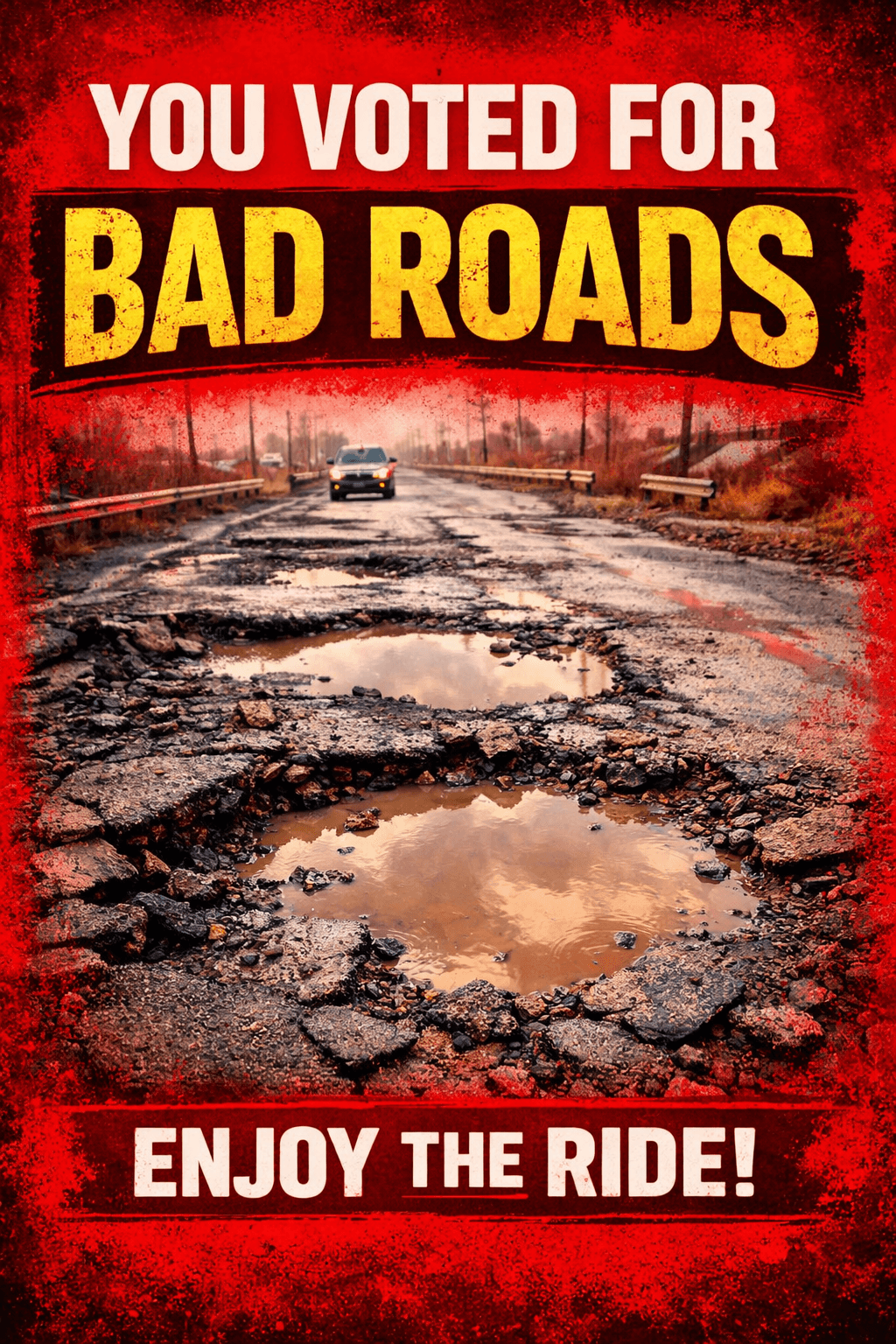
Red advocacy poster showing a damaged road as criticism of public-works failure.
Advocacy archive

Infrastructure

Road-failure poster

Filed against Friars Hill Road, visible defect complaints, and the wider frustration that public spending still left residents driving through failure.

Context

Archived as political advocacy imagery submitted to the site. The slogan language is protest rhetoric, not a standalone factual finding.

Comparison ledger

Claims beside outcomes, with the gap left intact

Water benchmarks, integrity promises, relief measures, and road-rehabilitation claims all read differently once they are lined up against the dated record.

Why this ledger matters

The clearest broken promises were the ones citizens could test for themselves

A housing deadline could be counted. Water reliability could be tested by every household. Road quality could be photographed. These comparisons work because the public did not need spin doctors to tell them when the promise had missed the mark.

What was promised

Housing deadlines, 24-hour water, strong oversight, durable road rehabilitation, and relief that was supposed to reach ordinary households.

What happened

Missed delivery windows, reset benchmarks, visible defects, recurring system failures, and scandals that kept reopening the transparency question.

Why it matters

Because daily life kept carrying the cost long after the announcement cycle moved on.

Utilities

24-hour water by September 2025

What was promised

Government said Antigua should reach 24-hour water access by September 2025.

What happened

Crabbes production problems and roughly 700 monthly system faults showed that the delivery side was still badly strained.

The gap

The benchmark was bold; the system condition remained too weak for a clean handoff into reliable service.

ANR benchmark pledgeCrabbes output reportAPUA fault data

Transparency

Integrity laws should reassure the public

What was promised

Antigua and Barbuda has formal integrity and disclosure mechanisms meant to protect against abuse.

What happened

US-linked criticism and local scandals kept exposing how thin those safeguards can look when records are hard to access and oversight remains quiet.

The gap

The legal framework exists, but public confidence still depends on visible enforcement that people can actually see.

Integrity Commission reportFOI criticismvehicle scandal silence

Cost of Living

Cost-of-living relief should reach households

What was promised

Temporary ABST cuts and relief measures were presented as meaningful help for consumers.

What happened

Housing, food, and transport stayed dominant household pressures even as tax relief temporarily softened some bills.

The gap

Short-run relief did not erase the structural affordability problem.

ABST holidayCPI updatesIMF inflation discussion

Infrastructure

Road rehabilitation should be durable

What was promised

Heavy public spending on roads was meant to deliver visible, lasting improvements.

What happened

Friars Hill Road quickly became a symbol of avoidable defects and quality-control concerns.

The gap

The public saw expenditure and visibility, but not the level of quality assurance they were promised by implication.

engineering criticismlocal reportingpublic frustration